Since temperature plays an important role in clinker formation, thermal measurements are key data to be monitored in the control room of the cement plant. Today's high-quality thermal scanners and cameras provide the cement industry with accurate and continuous monitoring of kiln shell temperature.
For many cement plant managers, there is no doubt that accurate thermal monitoring of the cooking line is a necessary investment. This investment generates profit by contributing to improving product quality, reducing operating and maintenance costs and optimizing energy use. Thermal scanners and cameras enable continuous monitoring of the kiln shell temperature and are therefore centrally located in the control rooms of hundreds of modern cement plants worldwide.
The furnace shell, which is at the center of the sintering process, is a long cylinder made of steel, usually 60-100 meters long and weighing around 1000 tonnes. Despite this impressive mass, the furnace shell is a giant, exposed to harsh environmental conditions. The interior of the oven is heated to 2000˚C on one side. The internal temperature on the other side is around 900˚C, while the outer layer has to withstand temperatures of -10˚C in cold winters. These strong temperature gradients create significant mechanical stresses in the furnace shell, which can have dramatic consequences on the durability of the refractory lining. Refractory bricks protect the furnace shell from overheating, as shell materials begin to weaken at temperatures above 500˚C. Therefore, early detection of hot spots resulting from refractory failure is critical to take rapid preventive measures and avoid costly maintenance and unplanned downtime. For early detection of these hot spots, cement plants must monitor the entire surface of the shell continuously and at high resolution with the help of thermal imaging technology. The HGH Kilnscan mantle scanner has been developed to detect any refractory brick weaknesses thanks to its high spatial resolution. Spatial resolution is the ability of the scanner to make accurate temperature measurements at the smallest spot size on the furnace shell. For maximum efficiency, the spatial resolution should be small enough to detect the fall of a single brick or its fragment. Depending on optical quality, sampling point size varies greatly between scanners on the market. Scanners with lower resolution may center temperature peaks in the thermal map, giving late warnings and inaccurate data. As a result, alarm thresholds may not be reached early enough to prevent furnace shell failure.
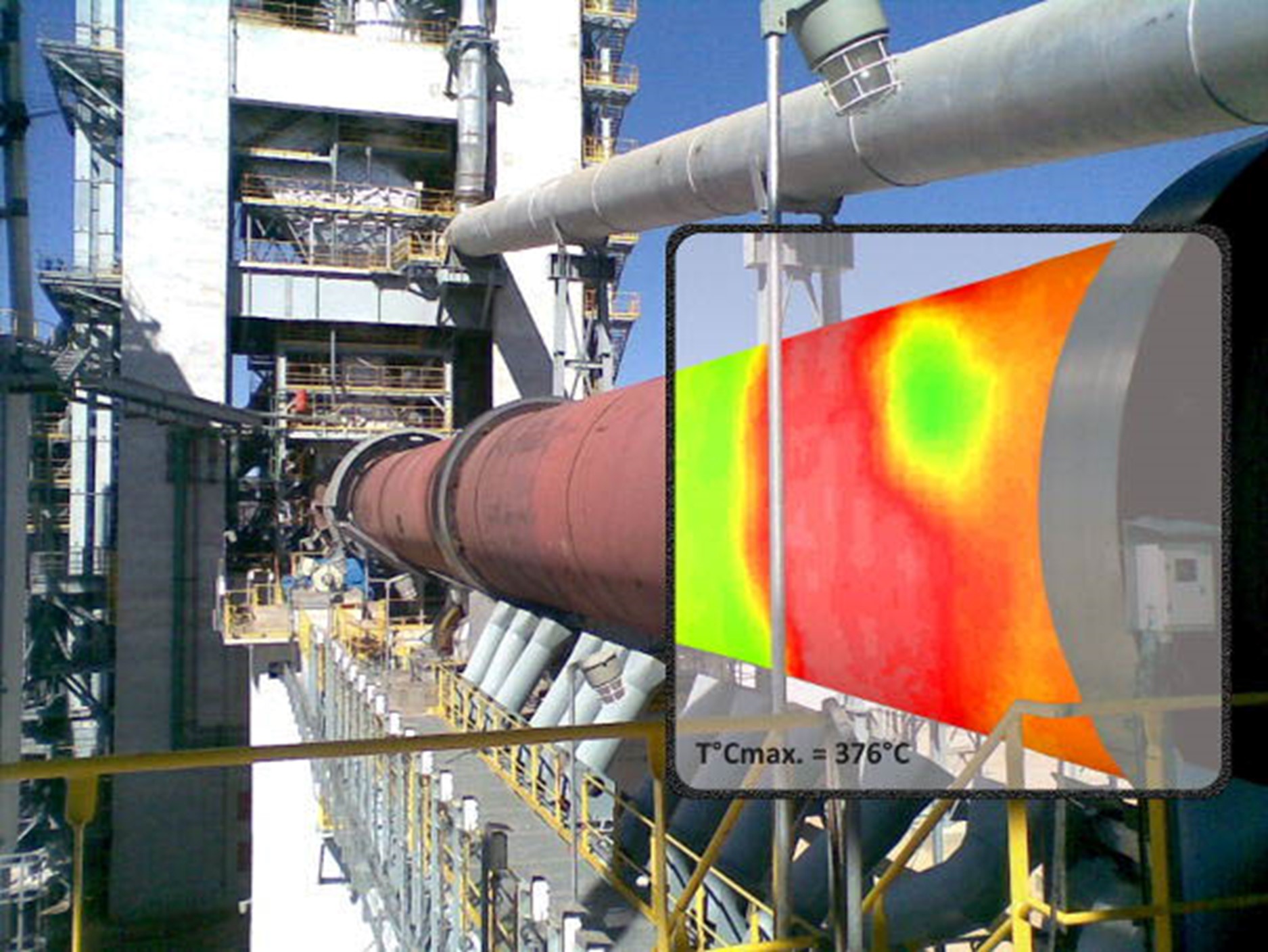
The Kilnscan high-quality thermal scanner with single-brick resolution detects such problems early and provides rapid and effective warning to rebuild the cladding (for example, cooling the shell locally or changing flame tube settings). This corrective action can prevent kiln stoppage and the negative consequences it brings, such as loss of production, costly repairs, and weakening of the cooled brick lining due to thermal shock.
Thermal resolution is a spot size dependent property. Combined with spatial resolution, it provides sharp and clear image display. Kilnscan has a resolution of below 0.1˚C, ensuring that any shadows are clearly reported on the thermal map. In the medium term, high-resolution thermal data monitoring provides accurate information about the time-dependent deformation of the coating thickness inside the furnace.
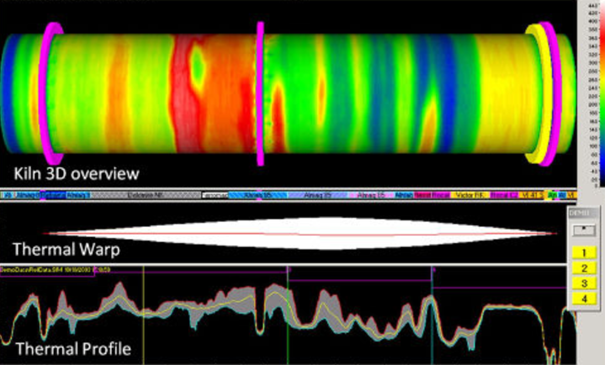
The coating is a layer of clinker or powder that adheres to the refractory coating. It is necessary because it reduces the shell temperature and protects the refractory material. However, an unstable coating thickness can cause energy loss and disrupt clinker advancement. Kilnscan accurately monitors the coating thickness and therefore, in the event of deviation, allows personnel to take preventive measures, such as adjusting combustion conditions or shell temperature with cooling fans. Excessive deposition of the coating can lead to the formation of rings in the sintering zone and other areas, which significantly reduces the inner diameter and reduces production performance. Rings accumulate and block clinker flow, requiring kiln stoppages and leading to high revenue losses. Even a single downtime avoided by accurate monitoring of coating thickness inside the oven fully justifies the investment in a high-quality thermal scanner.
The Kilnscan Mantle Scanner offers a unique feature that both preserves equipment life and increases production efficiency: thermal warp calculation. This function consists of calculating the thermo-mechanical deterioration of the furnace caused by temperature changes on the shell and detects the cyclic overloads and associated stresses to which the shell, ring, and roller stations are subjected. The medium- and long-term evolution of thermal drift data provides information on process evolution within the furnace; This includes processes such as the development of coatings, unburned material thrust and flame adjustment. It can also be a valuable indicator of the mechanical and thermal stresses on the shell and rings, as well as the load fluctuation supported by each leg. Combined with ring slip monitoring, i.e. measuring the gap between the furnace shell and the support tires, this data helps create a plan for checking the shell geometry, deviation in ovality, eccentricity and misalignment.
The furnace shell thermal monitoring provided by the Kilnscan mantle scanner can be complemented by a borescope inserted into the combustion chamber and the Pyroscan camera system placed close to the flame tube.
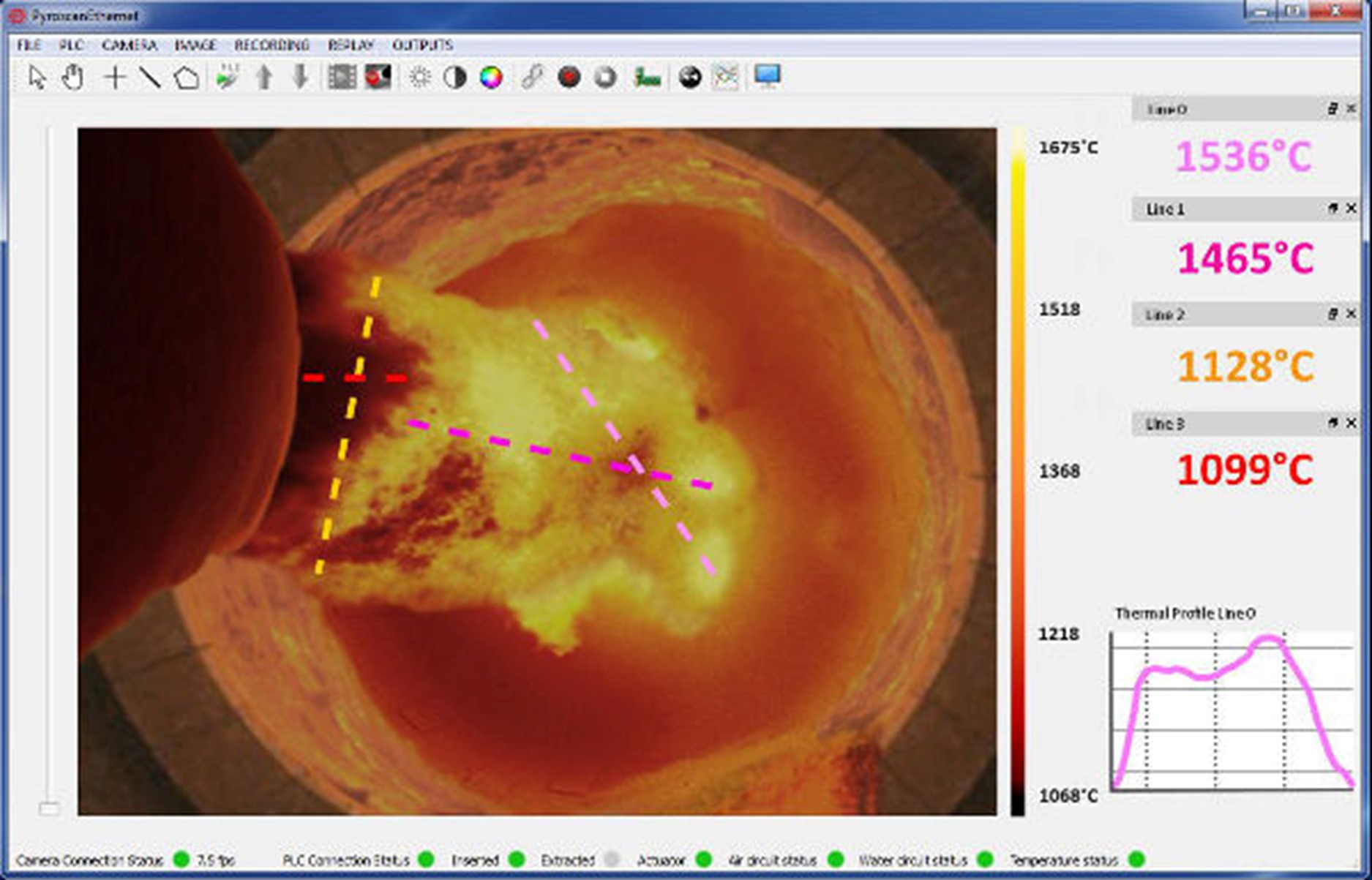
Pyroscan is a MegaPixel (1.2MP: 1280×960) Ethernet-based color camera that offers the highest resolution and dynamic range on the market. It provides flame shape and temperature measurement over a wide range from 700˚C to 1800˚C for each pixel. Thanks to the dust removal filter algorithms in the Camera that minimize dusty environment imaging, Pyroscan can operate in the harsh combustion chamber environment. Reliable temperature reading and HD images help operators stabilize the combustion process, homogenize and improve clinker quality. Pyroscan efficiently monitors any changes in flame pattern and heat transfer to the product. It is a comprehensive tool for Flame Tube adjustments, assisting the operator in adjusting the flame tube according to changing conditions, monitoring the air/fuel ratio and maintaining flame properties, especially for burning alternative fuels. In this sense, it allows fuel optimization and therefore savings in fuel costs, which is the biggest expense in cement production.
Beyond checking combustion conditions, Pyroscan also indicates serious coating build-ups such as sinter or coal ash rings that may form in the combustion zone, as well as formations known as rhino horns in the flame tube and snowman at the coolant inlet. Pyroscan is also used to monitor clinker decline in the cooler, measure clinker temperature and detect red rivers.
Pyroscan software allows the operator to remotely control the insertion and removal of the Pyroscan into the oven and provides accurate temperature measurements and displays in the combustion zone. Multiple measurement areas can be defined and alarms can be set in these areas. The software supports flame shape monitoring with user-defined analysis lines. Temperatures of regions can be recorded in a database and examined for further analysis. The software also includes an OPC client option and video streaming over IP for data sharing on the facility network.
The HGH thermal scanner and camera not only shows the formation of hot spots on the furnace surface immediately after a refractory brick falls, but also warns of potential risks far enough in advance that necessary adjustments can be made. With reliable and complete measurement of oven shell condition, the risks of unexpected malfunctions and damage can be reduced. This leads to increased equipment life and reduced operating costs through process optimization. Compared to the losses caused by unplanned downtime, the return on investment in thermal monitoring systems is really short.